
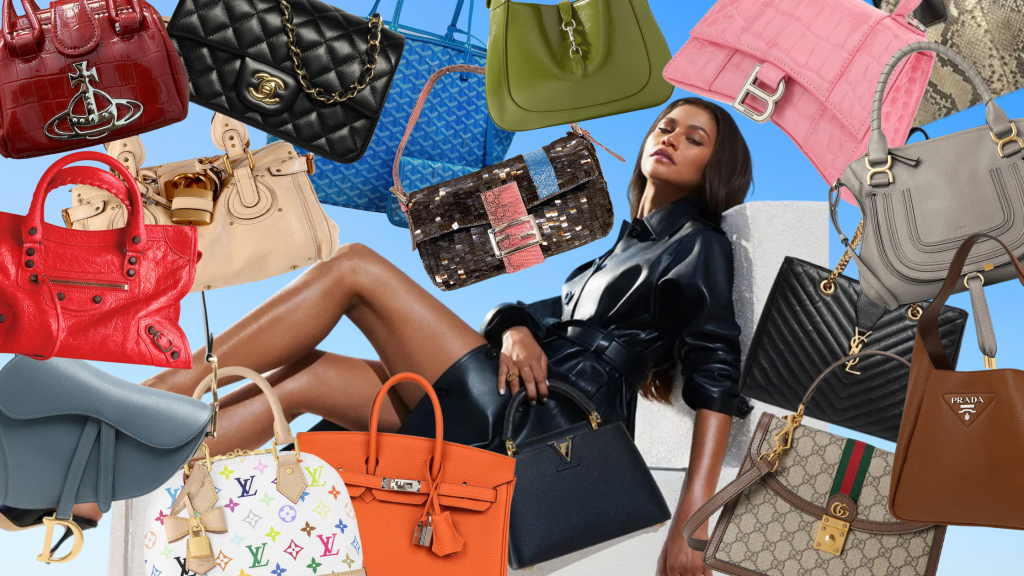
The Lifestyle of Luxury Handbags
Luxury brands do more than just sell expensive handbags. They also sell status, aspiration, exclusivity, and identity. Over the past two decades, luxury brand’s advertising and branding strategies have evolved to reflect shifting new consumer behaviors and social media influences. Through carefully curated messaging, these brands create desire, reinforce social expectations, and create a sense of exclusivity that makes their products symbols of status rather than mere fashion items.
One of the most significant aspects of luxury handbag marketing is the lifestyle it promotes. To many, owning a designer bag signals an “in” inside an elite social class. Advertisements consistently feature models and celebrities in aspirational settings, reinforcing the idea that these handbags are part of a high society lifestyle. Beyond personal aspiration, social expectation also plays a role. In professional and elite social circles, carrying a luxury handbag is often seen as a symbol of success and financial stability. Additionally, many brands like Hermès have positioned their handbags as investments, emphasizing their longevity and resale value. There is also the growing trend of “quiet luxury,” where consumers prioritize high quality, timeless pieces over trendy monogrammed pieces.
Exotic Locations and Celebrity Endorsements
Luxury handbag advertisements often feature breathtaking exotic locations, reinforcing the idea that these accessories are tied to an aspirational and jet setting lifestyle. High end brands strategically shoot their campaigns in destinations that evoke exclusivity and beauty, transforming their products into symbols of elegance and adventure. A prime example is Zendaya’s campaign in 2023 as the house ambassador for the Louis Vuitton Capucines bag. The campaign, shot on the French Riviera at the Roquebrune-Cap-Martin house, exudes a sense of effortless sophistication and freedom, visually aligning the handbag with a carefree yet refined existence.
In the advertisement, Zendaya is not merely posing with the Capucines bag, but she is moving with it, twirling barefoot along the edge of the water, her hair flowing as she dances freely. The imagery is breathtaking as she appears unburdened and lost in the moment. The scene suggests that luxury is not just about material wealth but about experiencing life with ease and grace. The Capucines bag is not just an accessory in this moment but it becomes a part of a lifestyle where one can afford to be both sophisticated and effortlessly carefree. The exotic setting of the French Riviera, known for its exclusivity and “old money charm” plays a crucial role in creating the allure of the handbag. The timeless architecture of Roquebrune-Cap-Martin and the deep blue water create an atmosphere of refined leisure, a world that seems just out of reach for most. This carefully chosen backdrop allows consumers to project themselves into this fantasy and owning the Capucines bag becomes more than a purchase. It is an invitation into an elite world where beauty, travel, and elegance are an everyday reality.
Luxury brands often use celebrity endorsements to reinforce their exclusivity and elevate their desirability. A prime example of this based on what I have seen on social media is Lily-Rose Depp’s collaboration with Chanel. Lily-Rose Depp has become a modern “face” of Chanel, representing a blend of youthful sophistication and timeless luxury. When a celebrity like Depp is seen carrying a designer bag, it’s not just an accessory but it becomes an emblem of status and cultural significance.
These collaborations resonate particularly with Gen Z, who are deeply influenced by celebrity culture and social media. As influencers and celebrities are often seen in luxurious settings, wearing designer clothes and bags, they craft an aspirational lifestyle that Gen Z eagerly wants to be a part of. For many young consumers, owning such a product is a symbolic step toward entering a world of glamour and privilege.
Shifting Strategies in Luxury Marketing
The advertising and aesthetic strategies used by luxury handbag brands have shifted significantly over time. In the early 2000s, niche luxury marketing relied heavily on exclusivity-driven campaigns, with brands like Goyard deliberately avoiding traditional advertising altogether. Instead, their products gained allure through secrecy and word of mouth, further reinforcing the idea that only those “in the know” had access. Similarly, Bottega Veneta took a unique approach by deleting its social media accounts in 2021, relying instead on private showings and high profile fashion events to maintain its desirability. This anti-marketing strategy actually fueled demand, as it suggested that true luxury did not need to be advertised.
However, with the rise of social media, marketing strategies evolved to create a sense of accessibility while maintaining exclusivity. It has become a powerful tool, allowing brands to showcase their products through influencers and celebrities who seamlessly incorporated luxury handbags into their daily lives. Rather than relying solely on traditional advertisements, brands began using subtle product placements, where influencers casually posted images featuring designer bags. This strategy created an illusion of “organic luxury”, making followers aspire to own these items themselves.
These days, it’s pretty common to see students on campus carrying Goyard totes or Balenciaga City bags. Social media is really driving these trends, with influencers and celebrities constantly showcasing them. What used to be high end, exclusive items are now seen everywhere, becoming symbols of status and style. For many students, wearing these is more about joining in on the trend and showing that they can afford these designer bags.
The Debate on Authenticity and Exclusivity
The discourse around luxury handbags has also been shaped by online debates regarding authenticity and exclusivity. On Reddit, discussions around Tik Toker Kylan Darnell and her sister Izzy Darnell and their luxury bags, particularly those gifted during Christmas, have sparked speculation about their authenticity, with some users suggesting they might be fake or replicas. This controversy highlights the blurred lines between real and fake luxury in an era where appearances matter more than the actual product.
Similarly, TikTok videos have gone viral discussing how many buyers of Hermès Birkin bags do not even purchase them because they like the style. Instead, the exclusivity and the difficulty of obtaining a Birkin drive demand because buyers feel compelled to accept the bag they are offered simply because they have spent years on a waitlist to get it. The Hermès sales model, which requires customers to build a purchase history before being “offered” a Birkin, reinforces the idea that their products are not just available to anyone with money but to those who have earned a place within the brand’s elite circle. There’s a TikTok account called LoveLuxury where people go to resell their Hermès bags, and one video perfectly illustrates how the brand’s exclusivity plays into the demand for its products. In the video, a woman expresses her frustration after spending two years on the waiting list for a Birkin, only to be offered a bag in a color and style she didn’t want. Despite the long wait, she was given something that didn’t match her preferences, which led her to take it to LoveLuxury. The account offers her an “instant payout” or a “part exchange” with other Birkins in stock, showing how some buyers feel compelled to resell their bags rather than keep something they’re not fully satisfied with. This phenomenon showcases how luxury brands manufacture desirability by making their products deliberately hard to acquire.
Status Symbols and the “Old Money” Aesthetic
A TikTok creator named Sanibel recently discussed the idea of status symbols and how people purchase luxury handbags not just for their aesthetic value, but for what they represent. Many consumers want to be perceived as part of the “old money” elite, even if they are not. This desire has fueled trends in quiet luxury, where understated yet recognizable pieces like an Hermès Kelly bag have become status markers. The rise of social media has amplified these aspirations, making certain handbags instantaneously recognizable as symbols of class and exclusivity. The appeal of “old money” style is that it implies generational wealth rather than new, flashy riches, and owning the right luxury bag is one way people attempt to project that identity.
She also argues in her book coming out To Have and Have More, a satire about wealth, privilege, status, and class, that “taste is a weapon that the upper class uses against the lower and middle class,” emphasizing that even if someone buys the right luxury items from the right brands, they may still be perceived as an imposter. This reflects the deeper reality that luxury consumption is not only about purchasing power but also about cultural capital, an understanding of the subtle, often unspoken codes of wealth. True exclusivity, she suggests, is not just about money but about social belonging, making it difficult for outsiders to fully integrate into elite circles even if they own the same designer goods.
The Psychological Tactics of Luxury Marketing
Luxury handbag marketing is built on psychological tactics that make consumers believe they are making independent choices when, in reality, they are being subtly influenced. Artificial scarcity, social proof, and emotional storytelling all contribute to reinforcing exclusivity. Over the past two decades, luxury handbag marketing has evolved, but its core strategy remains unchanged: selling not just a product, but an identity.
While marketing strategies have evolved with the rise of social media and influencer culture, the core principle remains unchanged: creating an illusion of exclusivity and scarcity to drive demand. Brands like Hermès have built their appeal around the idea that their products are not just accessories, but markers of cultural capital and social belonging. The waiting lists, the subtle displays of wealth, and the lifestyle imagery reinforce the notion that owning these items is about more than just money. It’s about earning a place in a select, elite circle.
 Natalia Diaz
Leave a comment