
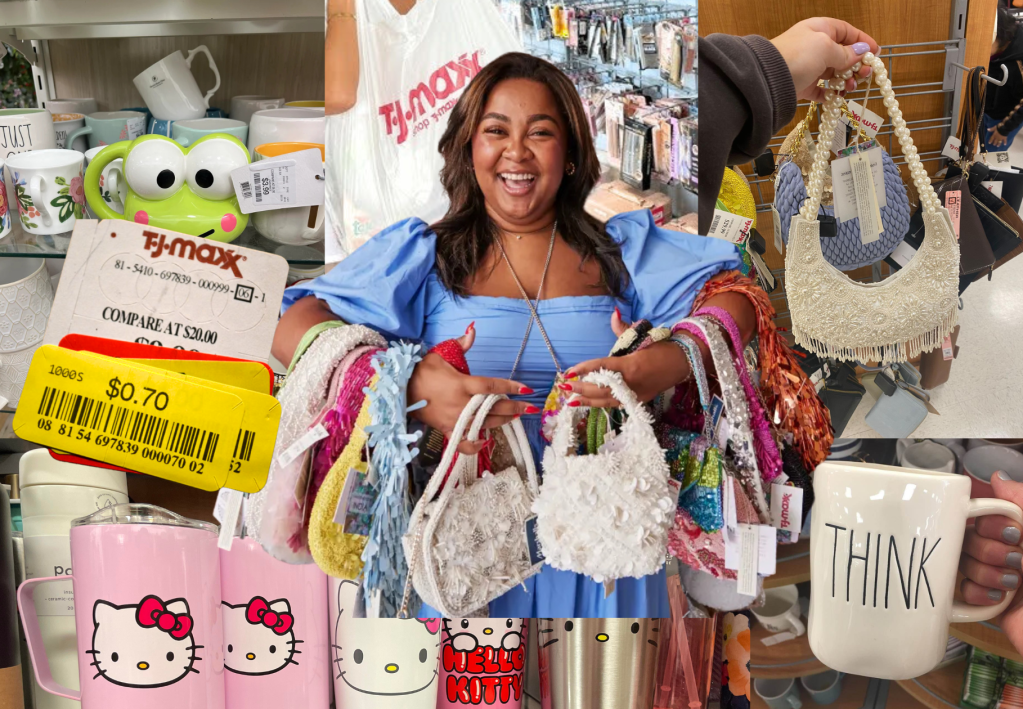
Walk into any TJ Maxx or Marshalls, and you’re immediately greeted with endless shelves of discounted handbags, racks of fast fashion, and aisles lined with serums promising transformation. For many women, these stores feel like a siren song, offering “treasures” at a “steal” and a quick serotonin boost. But beneath the thrill of a TJ Maxx haul lies a deeper issue: overconsumption, especially as it intersects with gendered marketing, emotional well being, and societal expectations.
The Lipstick Theory and the Rise of “Affordable Luxury”
Coined by Leonard Lauder, chairman of Estée Lauder, during the early 2000s recession, the lipstick theory suggests that during economic downturns, people, especially women, turn to small indulgences like cosmetics or accessories instead of larger, more expensive purchases.
The idea isn’t new. During the Great Depression and WWII, sales of beauty products stayed surprisingly strong. In uncertain times, looking good becomes a proxy for feeling in control. The logic is that a $10 lipstick feels like a justified pick me up when compared to a $200 dress.
Retailers like TJ Maxx and Marshalls have taken this insight and weaponized it. Their chaotic yet curated layouts encourage what one TikTok commenter aptly called a “treasure hunt”. The idea is simple: every trip could lead to an unexpected score. It’s gambling wrapped in retail… low stakes and high potential for a dopamine rush.
The Gendered Guilt of Consumption
It’s no coincidence that these stores are marketed predominantly to women. The messaging is clear: consumption is not only a treat but also a reward for your hard work, your stress, your emotional labor. One TikTok commenter confessed:
“I think about this every day. I genuinely cannot buy new—every time I have to feel an insane guilt.”
Another said:
“As a former TJ Maxx-a-holic, it’s a combination of ADHD hyperfixation, social media FOMO, trying to fill a depression void, irresponsibility, and having adult money that your inner child didn’t have.”
This raw honesty points to the deeper emotional terrain tied to consumer habits. These are not just purchases, they’re rituals, coping mechanisms, and ways of navigating a world where women are constantly made to feel “less than.”
The Toll on Mental Health and the Planet
When sadness, boredom, or stress hits, retail therapy seems like a quick fix. It’s no wonder that the checkout lanes are lined with beauty minis, candles, and inspirational mugs. It’s a final hit of dopamine before the guilt sets in. And social media, with its relentless highlight reels and influencer hauls, only adds fuel to the fire.
On a personal level, chronic overconsumption leads to clutter, decision fatigue, financial stress, and guilt. The dopamine hit fades quickly, leaving behind anxiety and self-recrimination. Many people experience what psychologists call “post-purchase dissonance” which is that sinking feeling when the thrill of acquisition wears off and reality sets in.
Environmentally, the cost is even higher. The fashion industry alone is responsible for 10% of global carbon emissions. Let’s remember…
Overproduction leads to:
- Landfills packed with discarded clothing and packaging
- Toxic dyes and microplastics in our waterways
- Exploitation of low-wage workers in unsafe conditions
Every “impulse buy” has a trail of environmental damage and human labor behind it. That $12 top? It might cost the planet far more.
Fight the Urge!! Mindful Alternatives to Overconsumption
If you’re looking to break free from the cycle, it helps to shift the narrative from consumption to intention. Here are a few ways to start:
- Declutter with Purpose: Marie Kondo’s approach to tidying up (keeping only what “sparks joy”) isn’t just about clean closets. It’s a mindset shift. When you truly value what you already own, the desire to buy more naturally diminishes.
- Ask yourself: Why are you shopping?: Are you shopping out of boredom, anxiety, or comparison? Naming the emotion can help disarm it. Try journaling or using a notes app to log what you’re feeling before a purchase.
- Second hand First: Challenge the notion that everything has to be new. Thrift stores, second hand sites, and garage sales, are not only more sustainable but often more satisfying. There’s still a “treasure hunt,” but with less guilt.
- Curate, Don’t Collect: Think of your wardrobe or home like an art gallery, carefully curated and full of meaning. Every piece should earn its place.
Small Luxuries, Big Questions
Lipsticks, beaded handbags, and half priced candles aren’t inherently bad. But when they become Band-Aids for bigger emotional wounds or tools of manipulation by retail giants, we need to ask why. Why are we being sold the idea that joy is something to be bought? And why are women bearing the brunt of this emotional and financial toll?
True joy comes not from consumption, but from clarity. From knowing who we are, what we need, and how we want to show up in the world. Maybe that means walking out of TJ Maxx empty handed. And maybe that’s the real treasure.
 Natalia Diaz
Leave a comment